

The Swiss Hut-to-Hut Experience: Ski Touring in the Berner Oberland
Updated: Dec 18, 2025
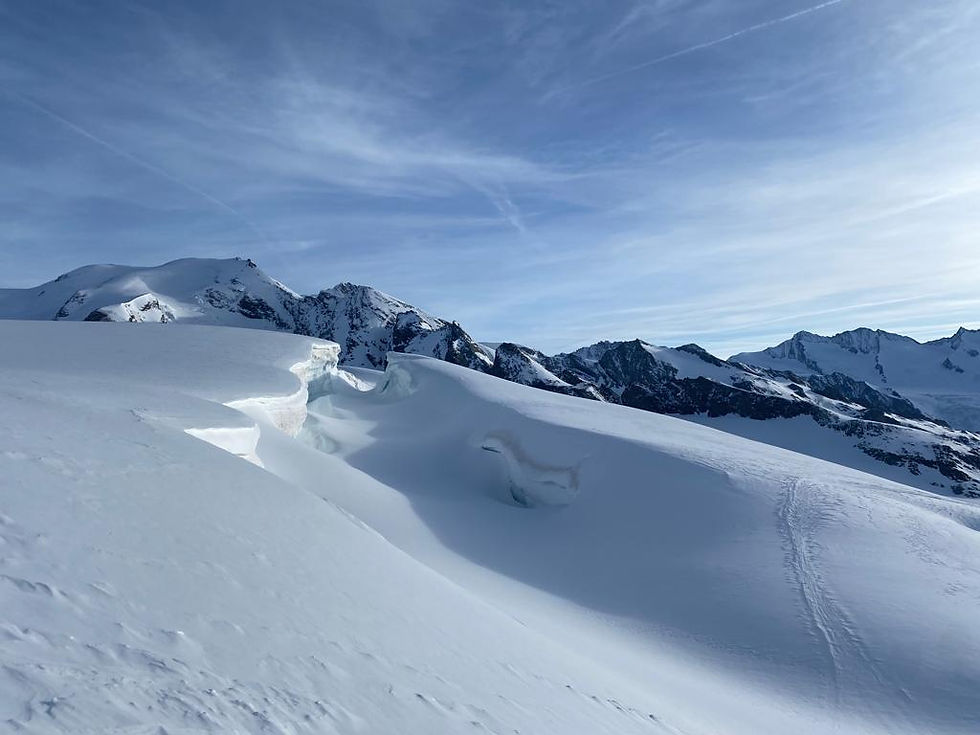
Nestled in the heart of the Alps, Switzerland remains one of the premier destinations for backcountry skiers. The Berner Oberland, known for its breathtaking glaciated scenery and incredible snow conditions, offers a fantastic experience for skiers of all levels. This region is famous for its striking alpine peaks, including the Eiger, Mönch, and Jungfrau. These towering giants provide a stunning backdrop to a variety of exciting terrain for backcountry skiing. From gentle slopes to challenging ascents, there’s something for everyone.
The Berner Oberland Tours
It was in April of 2022 that I found myself taking advantage of an excellent weather window and spent 7 days exploring the amazing ski terrain rising above the largest glaciers in Europe. From north facing powder descents to south facing 6,000 ft corn runs, we skied each day until our legs felt like they were going to fall off! I realized quickly that this region was where I wanted to bring my ski guests because there was something for everyone and all skiing abilities. Backcountry skiers can enjoy long powder runs on glaciers, steep descents from some of the highest peaks in Europe, or even some boot packing and ski mountaineering adventures, and then return to a cozy, warm alpine hut at the end of the day to relax and reset for the next day's adventure.
The ski touring in this region can be customized to the rider's experience and skill. From the intermediate leisure skier to the double black diamond expert shredder, there's a tour for everyone in the Berner Oberland. Let’s take a deeper look into some of my favorite ski tours that tailor to different skills and experience.

Favorite Ski Tours in the Berner Oberland
Basic glacial tour: If you have some backcountry skiing experience, are new to skiing on glaciers, and are a single black diamond skier in the resort, then a tour that focuses on traverses, open slopes, and mellow glacier skiing is perfect. This is a direct way to link up each alpine hut, ascending and descending slopes generally no steeper than 35 degrees. Each day consists of a 4-7 mile traverse to the next hut, carrying no more than a day pack. Some of my best days skiing in the Berner Oberland have been those wide open and long glacial descents!
Objective based tour: There are many options to increase the intensity of a ski tour in this region. Each glacier boasts numerous high peaks on its flank with the possibility for long, steep descents that cater to those more experienced with glacier skiing, steeper black diamonds at the resort, and a variety of snow conditions. My side tour from the Konkordia Hut to Grosses Grünhorn, for example, provided me with over 3,000 vertical ft of skiing, a bit of boot packing, and panoramic views from its summit. This objective required some roping up on the glacier, controlled skiing down 30 degree slopes around big crevasses, and using my sharps for gaining the summit. There are similar peaks that are easily accessible along each leg of a hut tour where we can practice our steeper skiing skills.
Ski Mountaineering Mania: This tour is for steep skiers and double black diamond resort shredders who enjoy considerable boot packing or even some rock scrambling to summit the tallest peaks in the Berner Oberland. After ascending as far as possible with skis, you'll transition into boot packing mode to reach the summit before returning to your skis and skiing a long, steep descent back to the glacier. Our exciting tour up Finsteraarhorn involved all of this and a bit of alpine short roping and rock scrambling to get to a sensational summit. We then reversed our course by down climbing our ascent path, clicked into our skis and sent a few steep pitches straight back the luxurious Finsteraarhorn Hut, where we put our feet up, ordered a beer, and soaked in the views of the glacier. A sense of adventure, good cardio, and expert skill and control when skiing is essential for these tours.

Preparing for a Swiss Hut Ski Tour
Glacier Travel and Crevasse Rescue
The Berner Oberland boasts the biggest glacier in Switzerland, the Aletsch Glacier, which intersects other substantial glaciers throughout this mountain range. No matter which level of tour you choose, you will want solid knowledge of glacier travel techniques, as well as glacier technical gear, when skiing in this region. Hiring a guide, or taking a glacier travel and crevasse rescue course, will give you the confidence you need to ski over glaciated terrain safely. On a Berner Oberland trip with Pika Mountain Guides, you get the chance to review your crevasse rescue and avalanche rescue skills, as well as practice roped glacier travel techniques.

Know Your Gear
Before heading out, ensure you have the right gear, and become familiar with how to use it all. The more familiar you are with all your equipment, the more efficient your skinning, skiing, transitions will be. Make sure to practice with your gear several times leading up to your big trip.
Essential items include:
Skis
A good backcountry ski is lightweight enough for uphill travel but stable enough to endure anything from powder to ice and crust on the descent. A ski waist width between 100-106mm is ideal for a variety of snow conditions. Ski construction made of lightweight wood or carbon will keep the weight down and ideal for long tours.
Bindings
Backcountry technical bindings are designed for ski touring because they are lightweight and allow for free heel movement on the uphill. "Tech" bindings can be finicky, so I highly suggest practicing stepping into and out of them many times to become more efficient during transitions from up to down. Be aware of ice build up that might interfere with the toe lock mechanism and could cause unintended release from the boot while skiing.
Touring Boots
Ski boots fit into 3 categories: crossover, touring, and ski mountaineering. While the crossover boot was designed for the skier that spends more time in the resort than out of bounds, it will be on the heavy side, be more supportive, and have more buckles. A ski mo boot, on the other hand, will be very lightweight but have much less support, and is meant for the fast backcountry skier for whom weight is more important than downhill performance. I recommend a boot that fits somewhere in the middle of these categories and provides an optimal blend of lightweight and performance. This is ideal for Swiss hut ski tours where you'll want the control on descent while skiing around crevasses, but at the same time you'll need a boot that doesn't weight you down on the long traverses to the next hut. A special note that custom insoles really improve comfort in a ski boot, which is important when wearing them all day.
Climbing Skins
Climbing skins should be in good to new condition, without glue globbing, and be cut to your ski shape and width, with your metal edges still exposed. While some skins are designed for better glide, others boast good friction for steeper skinning. A blend of both these factors are best for hut tours, where most ascents will be on slopes up to 30 degrees.
Ski Crampons
Ski Crampons are a specialty product designed to attach to the binding and provide more grip when on icy slopes. Because glaciers are literally ice, travel around crevasses and on steeper slopes in the Berner Oberland require ski crampons for safe travel.
Avalanche Safety Equipment
Always carry a beacon, shovel, and probe to stay safe in potential avalanche zones. Each piece of your avalanche safety kit should be in good to new condition, with fresh batteries and update firmware for your beacon, a metal shovel with an extendable handle, and a probe that's easy to deploy in seconds and is long enough to strike a victim in case of a deep burial.
Ski Touring Pack
We need to be able to fit everything, including water, layers, food, emergency supplies, and glacier kit into our touring pack. 30L or bigger is recommended for a hut to hut ski tour, along with a separate interior avalanche gear pocket to accommodate your shovel and probe.
Glacier rope
A 30m or longer rope is necessary for glacier travel in case a crevasse rescue needs to be performed. For groups of 4 or more, consider bringing two ropes for team rescue.
Glacier kit
At minimum, a harness and 2 locking carabiners are required for group crevasse rescue operations if in a guided group. If you don't have the benefit of relying on a guide, you will need some extra gear on your harness, particularly a micro traxion, tibloc, slings, more carabiners, and cordelette. It is vital that you are familiar with each tool's function and have practiced with them in a similar scenario.

Check the Weather Conditions and Avalanche Forecast
Weather conditions can change rapidly in the mountains. It’s vital to check local dependable forecasts and avoid touring during storms or high avalanche risk periods. Skiing on glaciers requires keen navigation skills when visibility is low and when snow conditions are unstable. The alpine huts provide an updated forecast for the next day, but it's good to be prepared with some essentials such as:
Phone numbers of nearby huts
Dependable and accurate weather apps
White Risk - the local avalanche alert app
Become a member of Rega - the national Swiss Search and Rescue organization
One of the most important tools to have on a ski tour is the ability to read maps and orient oneself in terrain. Knowing how to read a map, not just follow a line or route on your phone can be the difference between getting back to a hut quickly and safely, or having the situation turn into a full blown rescue operation. As a guide, I generally have at least two mapping apps downloaded onto my phone, just in case one bites the dust. For Swiss hut ski tours specifically, one of those mapping apps is SwissTopo, an incredibly accurate app using Swiss-made historical maps that include gpx routes of popular ski tours for your personal use.

Mountain Hut Life
A huge part of ski touring in the Swiss Alps is the mountain hut lifestyle. After an exhilarating day of backcountry skiing, it’s time to relax and refuel at a nearby hut, where the warden cooks a rich homemade dinner, we eat in communal style and make friends at nearby tables, then tuck in for a restful sleep in our bunks. I always look forward to returning to these huts, chatting with the wardens, and taking in the views and stories of other visitors. The alpine huts that are separated by a day's traverse on a glacier offer beautiful views, social interactions, and an opportunity to recuperate and refresh before heading out for another day of epic skiing. Sit out with a beer overlooking the vast glaciers and allow yourself to relax into this luxurious lifestyle.

Ride with confidence
For those looking for expert guidance, consider hiring a guide. Skiing on glaciers and navigating complex terrain can be so much more enjoyable when a professional is looking out for your safety and has deep knowledge of the snowpack and avalanche risks.
Explore more about hut to hut tours in Switzerland by visiting ski touring switzerland for guided tours and additional resources.
Whether you're seeking stunning landscapes, new exciting adventures, or a place to challenge yourself, the Berner Oberland has everything to offer for the backcountry skier. Embrace the journey and enjoy the breathtaking beauty of the Swiss Alps!


Comments